
Florida does not make an unmarried partner an heir. Sections 732.102 and 732.103 still run to a legal spouse, then to descendants, parents, siblings, and more remote kindred. Section 741.211 still refuses a new common-law marriage after January 1, 1968. Chapter 2026-57 made small-estate probate easier; it did not add a partner to that list. If the plan is that a partner takes property at death, the property has to move by some other legal machine. Those machines are specific. A will is only one of them, and it does not move everything.
A will disposes of probate assets: property titled in the decedent's name alone, with no surviving joint owner and no living named beneficiary. It must be executed as section 732.502 requires. It does not rewrite a payable-on-death contract, a transfer-on-death registration, a life-insurance designation, a retirement beneficiary form, or a deed that already names a surviving joint tenant. Families learn that the hard way when the will leaves "everything" to a partner and the IRA, the brokerage account, and the house each go somewhere else.
Payable-on-death bank accounts are in section 655.82. A beneficiary of a POD designation has no right to the sums on deposit during the lifetime of any party. On the death of the sole party, or of the last survivor of multiple parties, the sums belong to the surviving beneficiary or beneficiaries, in equal undivided shares if more than one survive, unless a specified older depository agreement provides otherwise. If no beneficiary survives, the sums belong to the estate of the last surviving party. The statute's sample form is explicit: at death of the party, ownership of a single-party POD account "passes to the designated pay-on-death beneficiaries and is not part of the party's estate." Naming the partner on the signature card is the act that moves the money. Naming the partner in the will is not.
Joint deposit accounts are a different statute. Section 655.79(1) presumes that an account in two or more names was intended to vest in the survivor, unless a contract, agreement, or signature card says otherwise. The same subsection then says that a deposit or account in the name of two persons who are "husband and wife" is considered a tenancy by the entirety unless otherwise specified in writing. Tenancy by the entireties is a marital title. Unmarried partners get the joint-survivorship presumption, not entireties. Loumpos v. Bank One, No. SC2024-1256 (Fla. Dec. 11, 2025), is about that spousal deposit-account rule. It is not a case about unmarried joint accounts, and it does not give unmarried partners entireties creditor protection.
Securities and brokerage accounts can be registered in beneficiary form under chapter 711. On death of a sole owner, or of the last to die of multiple owners, ownership passes to the surviving beneficiary (section 711.507). Section 711.509 says that transfer is effective by the registration contract and "is not testamentary." The will does not have to mention the account. The registration does.
Life insurance is even more direct. Section 222.13(1) says that insurance on the life of a Florida resident "shall inure exclusively to the benefit of the person for whose use and benefit such insurance is designated in the policy," and is generally exempt from the insured's creditors, unless the policy or a valid assignment provides otherwise. If the insurance is payable to the insured, the estate, or the executors or administrators, it becomes part of the estate and is administered in probate. A partner who is the named beneficiary takes by contract. A partner who is only in the will takes only if the policy is payable to the estate -- which is usually the worse design.
Retirement accounts follow their own beneficiary forms, and often federal rules that this post is not going to paraphrase as tax advice. Florida exempts many tax-qualified retirement funds from creditors (section 222.21(2)), with a listed exception for a surviving spouse's elective share under part II of chapter 732. Elective share is a **spouse** right (sections 732.201, 732.2065 -- 30 percent of the elective estate). An unmarried partner cannot elect. The practical point is simpler: the name on the beneficiary form is the name that is paid.
Real estate is the asset that does not have a Florida transfer-on-death deed statute. Survivorship on land has to be written into the deed. Section 689.15 abolishes implied survivorship; except for estates by the entirety, a conveyance to two or more creates a tenancy in common unless the instrument expressly provides for the right of survivorship. Unmarried partners who intend the survivor to own the house need those words. Unmarried partners who intend each half to follow a will need a tenancy in common, and then a will or a trust that actually disposes of that half. Adding a partner to a deed is a present conveyance, not a harmless "just in case" label, and it can expose the property to the partner's creditors.
A funded revocable trust is the other way to move assets without making the partner an heir. Assets must be retitled into the trust, or made payable to it, during life. The Florida Bar's revocable-trust pamphlet is still right on that point, even though its summary-administration dollar figure is stale. An unfunded trust is a stack of paper. A pour-over will is still needed for leftovers. On the settlor's death, the trustee of a section 733.707(3) trust must file a notice of trust (section 736.05055). Revocable-trust assets are not hidden from the settlor's creditors during life, and they remain liable for estate obligations to the extent the probate estate is insufficient (section 733.707(3)). For unmarried partners, the trust works if it is funded and if the partner is actually named as a beneficiary or successor.
Mismatch is the usual failure. The will leaves the residue to the partner. The IRA still names a sibling. The house is in one name. Section 732.703 voids certain beneficiary designations to a **former spouse** after a Florida dissolution, for listed assets including life insurance, IRAs, POD accounts, and TOD registrations, with exceptions and a federal-law override. That statute is a divorce mop-up. It does not create a designation in favor of a partner, and it does not fix a form that was never updated after someone moved in.
What actually works is inventory: every account, policy, deed, retirement form, and the trust funding, lined up against the people the owner intends to take. A partner takes as a joint tenant, a POD or TOD beneficiary, a policy beneficiary, or a trust beneficiary -- or, for probate leftovers, as a devisee under a valid will. A partner does not take as an heir. The 2026 summary-administration cap does not change that.
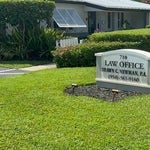
This article is general information, not advice about a particular account, deed, or beneficiary form, and not tax advice. The Law Office of Shawn C. Newman, P.A. offers a free consultation in person or by Zoom. Call (954) 563-9160 or visit www.shawnnewman.com. The office is at 710 NE 26th Street, Wilton Manors, Florida 33305, and serves Broward, Palm Beach, and Miami-Dade Counties.

Comments
There are no comments for this post. Be the first and Add your Comment below.
Leave a Comment